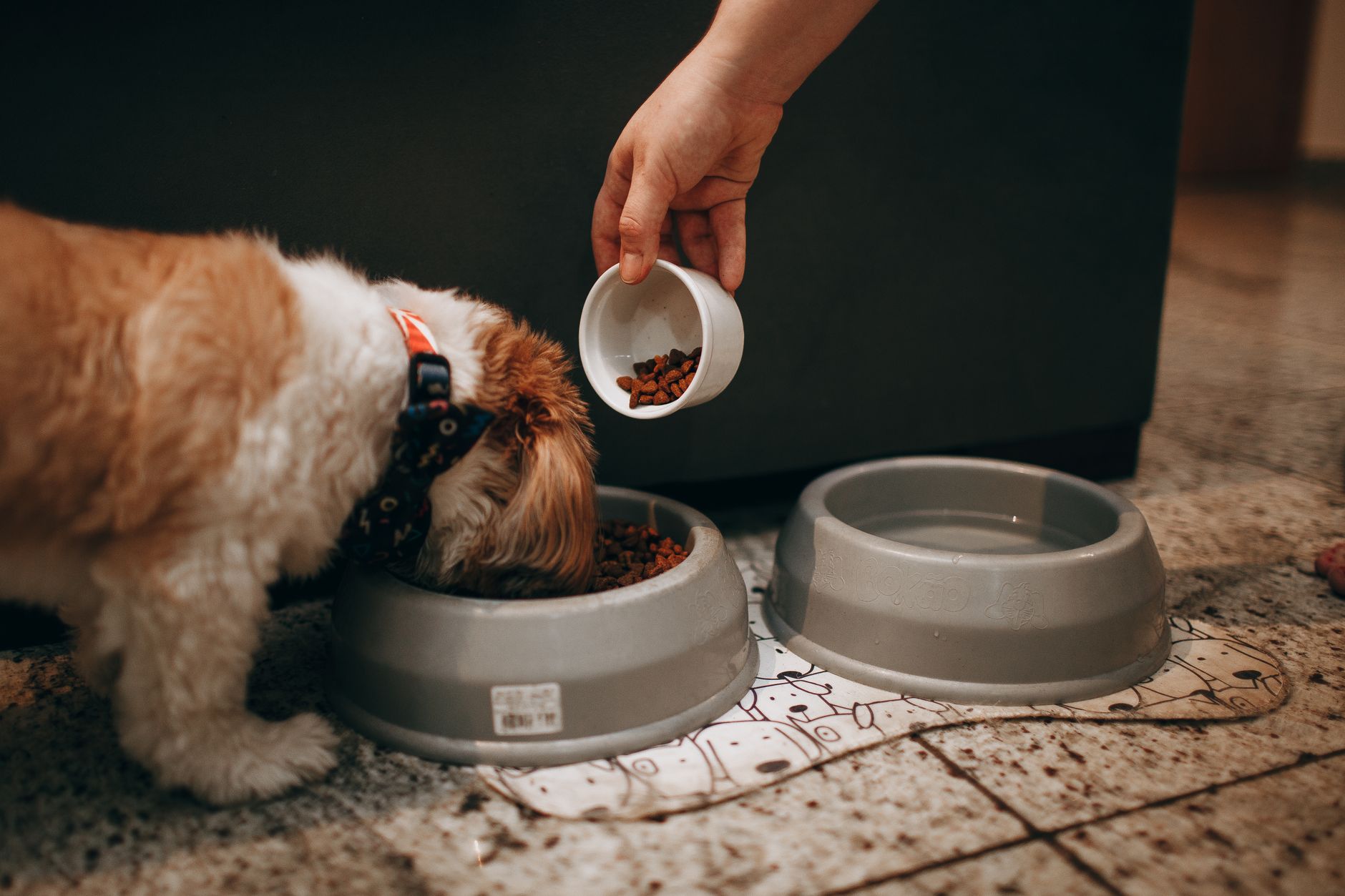
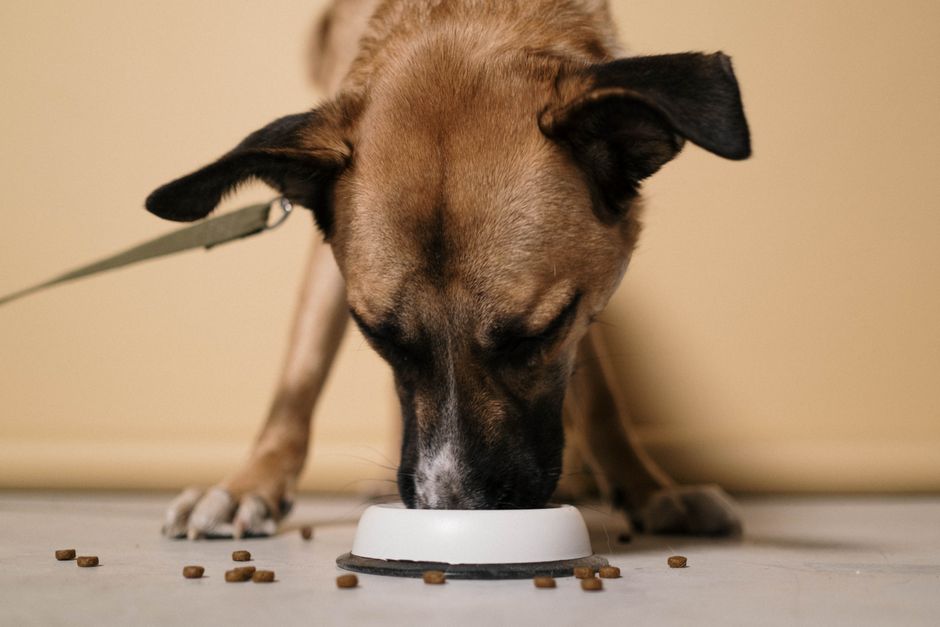
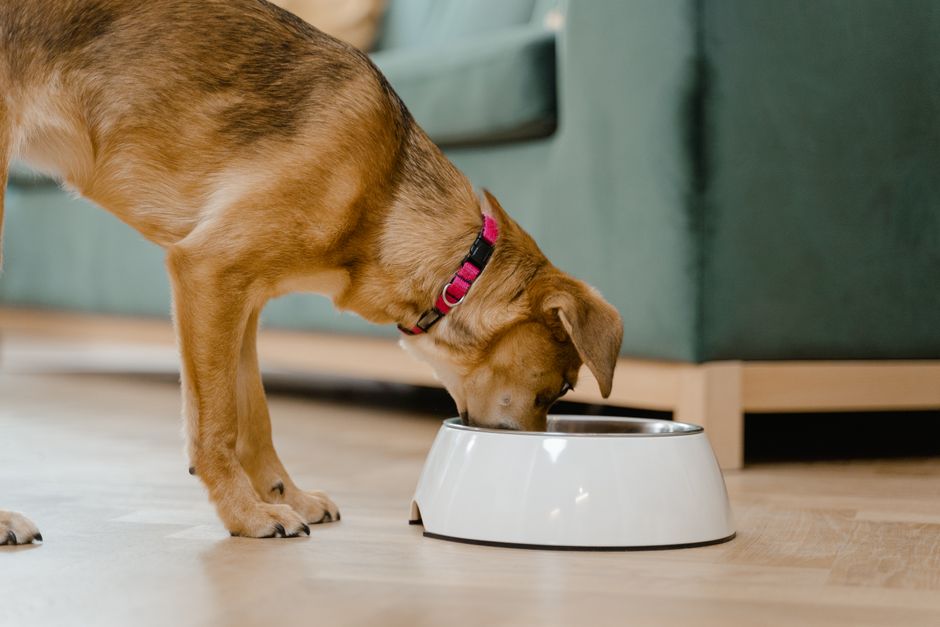
A slow feeder dog bowl turns a dangerous gulp into a slow, chewed meal and lowers bloat risk for big, deep-chested dogs. Here are five large-capacity picks worth buying.
Updated June 2026·13 min read·Researched against veterinary guidance on bloat (GDV) prevention
Large dogs are champion gulpers. A grown Labrador, German Shepherd or Great Dane can clear a full bowl in well under a minute, barely chewing and swallowing a mouthful of air with every bite. It looks harmless, even efficient. It is one of the few bloat risk factors you can actually control, and a flat open bowl does nothing to slow it down.
The real worry is bloat, properly called gastric dilatation-volvulus or GDV. In deep-chested breeds the stomach can fill with gas and then twist on itself, sealing off its own blood supply and the exits at both ends. It is a true emergency. Surgery runs into the thousands, and an untreated dog can go from normal to critical in a couple of hours. Eating fast and gulping air is one of the triggers vets name most often, which is exactly why a slow feeder is worth the small spend.
Here is the part most lists skip: not every slow feeder is built for a big dog. A bowl sized for a spaniel cannot hold a large-breed portion, thin plastic gets cracked and flipped by a determined eater, and a slick base just slides across the kitchen while your dog chases dinner around the room. So this guide does not hand you a ranking and leave. It compares five large-capacity feeders on the five things that actually matter for a big dog, then explains the health stakes in full so you can match the bowl to your own dog.
Compare
Comparison matrix: 5 slow feeder dog bowls for large dogs
Every pick below holds a real large-breed meal and slows a determined eater. They differ on material, maze design, difficulty, capacity and how easy they are to clean. Scan the matrix, then read the short verdict on each.
Prices shift constantly, so we use price tiers, not figures. Tap a bowl name for its verdict.
The verdicts
A closer look at each slow feeder dog bowl for large dogs
Best overall
Price: Budget
Best for: Most large dogs
Chew-proof: No, it is plastic
Outward Hound Fun Feeder Slo Bowl (Large)
The proven default slow feeder for most large dogs, and cheap enough to buy without overthinking it.
Food-safe plasticMoulded maze and ridgesDifficulty: Moderate to hardCapacity: LargeDishwasher: Yes, top rack
This is the one most big-dog owners reach for first, and it earns the spot. The large size holds a proper meal, the moulded maze and ridge patterns are deep enough to genuinely stall a gulper, and the base grips well under a normal eater. The plastic is BPA, PVC and phthalate free and goes on the top rack of the dishwasher, so cleaning the grooves is a rinse rather than a chore. The range comes in different patterns and difficulty levels, so you can step the challenge up for the fastest eaters. The only real catch is that a committed chewer can destroy plastic, in which case you want one of the stainless picks instead.
The high-capacity choice when a standard slow feeder is simply too small for your dog's meal.
Food-safe plasticTall raised ridges, many pocketsDifficulty: ModerateCapacity: Extra-largeDishwasher: Yes, top rack
Some large dogs eat portions that overflow an ordinary slow feeder, which defeats the point because food piled over the ridges gets swept up in seconds. This one is built around capacity, with a tall ridged design that spreads a big meal across many separate pockets so it keeps slowing the dog even when the bowl is full. The raised pattern forces your dog to work pocket by pocket rather than sweeping, and the wider footprint helps it sit steady. It is bulkier on the floor and, being plastic, is not for hard chewers, but for a giant breed on a generous portion the extra headroom is the whole point.
The chew-proof, hygienic pick for power eaters who treat every plastic bowl as a chew toy.
Stainless steel, rubber rimCentral obstacleDifficulty: Gentle to moderateCapacity: LargeDishwasher: Yes, top rack
If your dog bites and cracks plastic feeders, this is the answer. It is stainless steel with a central obstacle that breaks the meal up, and there is nothing thin or brittle for a determined eater to gnaw off and swallow. Stainless also will not hold odours or harbour bacteria the way scratched plastic can, so it stays cleaner over years of daily use. A bonded rubber rim keeps it quiet and stops it sliding, and it is dishwasher safe on the top rack. The maze is simpler than a moulded plastic one, which is the trade-off with metal, but it still slows a gulper meaningfully while surviving abuse that wrecks softer bowls.
A heavier, larger-capacity stainless feeder for owners who want a clear step up in build and grip.
Powder-coated stainless, non-slip ringRaised centre obstacleDifficulty: Gentle to moderateCapacity: Large, heavier buildDishwasher: Wipe or top rack
This is the upgrade for owners who want stainless steel with more capacity and a more finished feel. The large size takes a sizeable meal, the raised centre slows eating, and the powder-coated face plus a non-slip ring keep it planted on hard floors so a big dog cannot shove it around. Like all stainless feeders the pattern is simpler than plastic, but the heft is the selling point: it is hard to flip, wipes clean in seconds, and is built to last for years rather than being replaced when it gets chewed or scratched. It is among the priciest picks here, so it suits owners buying once and buying well.
The fix for a dog who slides or flips the bowl across the room halfway through dinner.
Plastic with suction baseSectioned maze, suction-lockedDifficulty: ModerateCapacity: LargeDishwasher: Yes, top rack
Some dogs do not just eat fast, they bulldoze the bowl around the kitchen while they do it, and a feeder skating away cannot slow anything down. This one tackles that with a strong suction base that locks onto smooth floors, so the bowl stays put and the maze can do its job. The patterned bowl breaks the meal into sections, and the multi-purpose design folds in storage and travel use, which is handy for car trips and stays away from home. It is plastic, so it is for normal eaters rather than serious chewers, and the suction needs a clean, smooth surface to grip, but the anti-slide hold is its real strength.
Bloat (GDV) explained, and why fast eating is the danger
Bloat starts as gastric dilatation: the stomach fills with gas, food and fluid and swells like a balloon. On its own that is painful and serious. The catastrophe is the second half, the volvulus, when the distended stomach rotates on its axis and twists shut at both ends. Gas and pressure are now trapped with nowhere to go, the blood supply to the stomach and spleen is cut off, tissue begins to die, and the dog slides into shock. This is where the hours matter, and why owners of at-risk breeds are taught to treat it as a drive-to-the-emergency-vet-now event, not a wait-and-see one.
Fast eating feeds almost every part of that chain. A dog that inhales a meal swallows a large volume of air along with the food, a habit called aerophagia, and that gas is what inflates the stomach. Wolfing a big single portion stretches the stomach wall quickly and stresses the ligaments that are supposed to hold it in place. Add the gas from rapid fermentation, a dog that drinks a lot of water straight after, or hard exercise too close to a meal, and you have the conditions bloat thrives on. Slowing the meal will not remove every risk, but it directly targets the air-gulping and the rapid stretch, which are the two pieces most under your control.
Size and shape are the backdrop. Deep, narrow chests give the stomach more room to swing and rotate, which is why giant and large breeds dominate the case lists while small dogs rarely bloat. None of this means a big dog is doomed; plenty live long lives and never bloat. It means the smart move is to stack the deck in your favour: feed at floor level, split meals, keep things calm around dinner, and turn a sixty-second gulp into a multi-minute meal with a feeder built for the job.
Warning signs: know these before you ever need them
Because the big, deep-chested dogs most likely to use a slow feeder are also the ones most at risk, every owner should be able to spot bloat fast. GDV moves quickly, so go straight to an emergency vet if you see:
1Repeated retching or trying to be sick with little or nothing coming up
2A swollen, hard or visibly distended belly, often worst just behind the ribs
3Restlessness and pacing, unable to settle, sit or lie down comfortably
4Heavy drooling, panting and obvious signs of pain or distress
5Pale gums, fast shallow breathing, weakness or collapse, which signal a late, critical stage
EmergencyBloat is a life-threatening emergency. If you see these signs, do not wait to see if they pass. Go straight to a vet, because the first hour or two matters enormously. A slow feeder is one sensible piece of prevention alongside smaller meals, calm rest around mealtimes and your vet's advice, not a substitute for veterinary care.
Who is at risk
Who is most at risk: the bloat factor matrix
Bloat risk is not one switch, it is a stack of factors that add up. The more of these your dog ticks, the more a slow feeder and a conversation with your vet are worth. Eating speed is the factor you can change today.
Risk factor
Weighting
Why it matters
Deep, narrow chest
High
The single biggest predictor. A deep chest gives the stomach room to swing and twist. Great Danes, German Shepherds, Standard Poodles, Weimaraners, Irish Setters, Dobermans and Boxers sit near the top of the case lists.
Large or giant overall size
High
Bigger dogs have bigger stomachs with more room to rotate, and incidence climbs sharply with body size. Most bloat cases are large and giant breeds, not small ones.
Eats fast and gulps air
Raises risk
Inhaling a meal swallows air and stretches the stomach quickly. This is the controllable one, and the entire reason a slow feeder exists.
Fed one big meal a day
Raises risk
A single large load stretches the stomach more than the same food split up. Two or three smaller meals are gentler than one giant one.
Family history of bloat
Higher
A first-degree relative that bloated raises the odds, so genetics matter. If a parent or sibling has had GDV, treat your dog as higher risk.
Older age, lean or anxious build
Moderate
Risk rises with age, and lean, deep-chested, nervous eaters appear more often in case reports than relaxed, stocky dogs. Stress around food does not help.
If your dog ticks several of these boxes, ask your vet about prophylactic gastropexy, a procedure that tacks the stomach in place and is often done at the same time as spaying or neutering for the highest-risk breeds.
Speed test
The eating-speed test: is your dog actually a fast eater?
Not every big dog needs a slow feeder, but most fast eaters do, and owners often miss how quick their dog really is. Run the simple time test, then check the tell-tale signs.
The 60-second test
Time one normal meal from the first bite to the empty bowl. If a full large-breed portion is gone in under a minute, your dog is gulping. The goal of a slow feeder is to stretch that same meal to several minutes of nosing and licking food out of the channels.
Clears a full bowl in under a minute or two, barely pausing
Swallows food whole with little or no chewing
Gulps and swallows audibly, sometimes inhaling between bites
Coughs up or regurgitates undigested food or whole kibble soon after eating
Burps a lot, or seems gassy and uncomfortable after meals
Gets frantic, paces or pushes the bowl around the moment food appears
If your dog shows several of these, a slow feeder is the easiest single change you can make. If your dog already grazes calmly and chews, you have less to gain, though a feeder can still add enrichment and curb the rare gulp.
Interactive
Check your dog's bloat risk
Tick the factors that apply to your dog for an instant low, medium or high readout, and a sense of how much a slow feeder can help.
Your readout will appear here
Start ticking
Check the boxes that apply and your bloat-risk readout updates instantly.
A guide, not a diagnosis. If you ever see bloat warning signs, call an emergency vet.
The mechanism
How a slow feeder dog bowl lowers the risk
A slow feeder is just an obstacle course for dinner. Ridges, channels and central bumps mean your dog cannot scoop a mouthful, so they have to nose and lick the food out a little at a time. That single change stretches a meal from a sixty-second inhale to several minutes of steady eating, and the slower pace is what does the work.
Slower eating means less gulped air, which is the gas that inflates an at-risk stomach in the first place. It also stops the rapid, balloon-like stretch that comes from dumping a big portion in all at once. Beyond bloat, a slower meal helps a dog feel full, which curbs the begging and weight gain that plague food-motivated big breeds, and it adds a little daily enrichment that a flat bowl never will.
Forces nosing and licking instead of scooping, so the meal slows down
Cuts the volume of air swallowed during a fast meal
Avoids the sudden stomach stretch of a gulped single portion
Helps with satiety and weight control in food-driven breeds
Adds low-effort daily enrichment at no extra cost
A slow feeder lowers a known risk factor, it does not guarantee prevention. Pair it with smaller, split meals, calm rest around mealtimes, floor-level feeding, and your vet's advice on whether a gastropexy makes sense for your breed.
Difficulty
Difficulty levels: matching the maze to your dog
A slow feeder only works if your dog uses it. Too easy and it does not slow anything, too hard and a frustrated dog walks away hungry. Match the difficulty to your dog and step up only if needed.
Moderate
The sensible starting point
Wider channels and gentler ridges. Right for first-timers, seniors, dogs with shorter or flatter faces that struggle to reach into tight grooves, and any dog you are introducing to the idea. Most dogs should start here.
Slower
For confident fast eaters
Deeper, tighter mazes that make the dog work harder. Step up to this if your dog clears a moderate feeder in well under a minute and still bolts the food. It stretches the meal without tipping into frustration for most eaters.
Slowest
For relentless gulpers
The tightest spirals and deepest pockets, for the dog that beats everything else. Watch closely that your dog does not give up and leave food, or get so frustrated they lose weight. Back off a level if that happens.
Brachycephalic (short-faced) dogs and seniors with stiff necks or dental issues often do best on a moderate pattern even if they eat fast, because a maze they physically cannot work is just a bowl they avoid.
Photo: MART PRODUCTION / PexelsMaterials
Materials and cleaning: stainless steel vs plastic for chewers
Material is the choice that depends most on your individual dog. The question is simple: how rough is your dog with the bowl?
Food-safe plastic
Best for: Gentle to normal eaters who do not chew the bowl
Plastic feeders have the deepest, most elaborate mazes and cost the least, which is why they slow eating so well. Choose one that is clearly BPA, PVC and phthalate free. The downsides are weight and durability: lighter bowls get shoved around, and once the surface is scratched or chewed it can trap food and bacteria, and a determined chewer may crack off and swallow a piece.
Stainless steel
Best for: Power chewers, drop-and-fetch dogs, hygiene-first owners
Stainless is chew-proof, will not hold odours, and stays hygienic for years because there is no porous surface to scratch. A bonded rubber rim or non-slip ring keeps it quiet and planted. The trade-off is a simpler maze, usually a central obstacle rather than an intricate pattern, and a higher price. For a dog that destroys plastic, that is a trade worth making.
Keeping a slow feeder clean
Deep grooves are the whole point of a slow feeder, and they are also where wet food, kibble dust and saliva collect. On a bowl used two or three times a day that turns into grime, bacteria and even mould fast, which matters more here than on a plain open bowl.
Clean it after each meal. Most plastic and stainless picks are top-rack dishwasher safe, which is the easiest route, but check your model. For a quick hand wash, a small bottle brush or an old toothbrush gets right into the channels where a sponge cannot reach. Stainless wipes clean in seconds, which is part of its appeal for busy households.
Alternatives
Slow feeder vs the other ways to slow a fast eater
Maze or ridge slow feeder Best
Purpose-built to stretch a meal into minutes while still holding a full portion. The simplest, most reliable way to slow a big gulper at every meal.
Food puzzle or snuffle mat OK
Great for enrichment and slowing things down, but fiddly to load with a large portion and slow to clean. Better as an occasional extra than the everyday dinner bowl.
A large object in a normal bowl Use care
A clean, too-big-to-swallow ball in a regular bowl can slow eating in a pinch. The risk is choking if the object is small enough to gulp, so size it carefully.
Plain open bowl Avoid
Lets a big dog inhale the whole meal in under a minute, gulping air as they go. It is the exact habit a slow feeder exists to fix.
Switching over
How to switch your dog to a slow feeder
Most large dogs take to a slow feeder within a meal or two. A few simple habits make the change smooth and keep the bowl working:
Serve the same food and the same portion, just in the new bowl, so the only thing that changes is the pace.
Let your dog sniff and see that it is still their normal dinner, so the maze does not put them off.
Use it for every meal, not just now and then, so slow eating becomes the routine rather than a novelty.
Set it on a non-slip mat or against a wall so a powerful eater cannot push it across the floor.
Split the daily food into two or three smaller meals, which is gentler on an at-risk stomach than one big serving.
Clean it after each meal, getting into the deep grooves, since trapped wet food turns to grime fast.
Common slow-feeder mistakes to avoid
Buying a standard or small bowl for a large dog, so a full meal overflows the maze and stops slowing anything.
Choosing flimsy plastic for a power chewer who cracks it apart and may swallow the pieces.
Picking a maze so hard your dog gives up, walks away, and loses weight instead of slowing down.
Letting food cake into the deep grooves, which grows bacteria and mould on a bowl used three times a day.
Treating the feeder as a cure for bloat and ignoring meal size, calm rest at mealtimes, and your vet's advice.
Questions
Slow feeder bowl FAQ
Which slow feeder dog bowl is best for a large dog?
For most large dogs the Outward Hound Fun Feeder Slo Bowl in the large size is the best all-round pick: it has a deep maze, holds a full meal, and is cheap and proven. If your dog chews through plastic, a stainless steel feeder like the NMN Not So Fast is the more durable choice, and the Neater Pets feeder wins on sheer capacity for giant breeds.
Do slow feeder bowls actually prevent bloat (GDV)?
They lower a known risk factor rather than guarantee prevention. Eating fast and gulping air is one of the triggers vets link to bloat, and a slow feeder slows the meal and cuts air intake. Treat it as one sensible piece of prevention alongside smaller split meals, calm rest around mealtimes and veterinary advice, not as a medical cure.
How fast is too fast when a big dog eats?
Time one normal meal. If a full large-breed portion disappears in under a minute with little chewing, your dog is gulping and would benefit from a slow feeder. Other tells are swallowing kibble whole, audible gulping, burping, and bringing up undigested food shortly after eating.
Are stainless steel or plastic slow feeders better for big dogs?
Both work, and the right answer depends on your dog. Food-safe plastic feeders usually have deeper, more elaborate mazes and cost less, which suits gentle eaters. Stainless steel is far harder to chew or crack and will not hold odours, making it the better choice for power chewers and dogs that treat the bowl as a toy.
How much food does a large-dog slow feeder hold?
It varies by model, and the ridges take up space, so a slow feeder holds less than a plain bowl of the same footprint. Check the rated volume against your dog's actual per-meal portion and choose one with a little headroom, so the food stays down in the channels where the slowing happens instead of piling over the top.
My dog pushes or flips the bowl across the floor. What helps?
Look for a wide, heavy feeder with a strong non-slip or suction base, like the Super Feedy 4-in-1, or a weighty stainless bowl with a rubber ring such as the NMN or Jax and Bones picks. Setting any feeder on a rubber mat or wedging it against a wall also stops a powerful eater shoving it around.
Can a slow feeder be too hard for my dog?
Yes. A maze that is too difficult can frustrate a dog or make them give up and leave food behind. Start with a moderate pattern and only move to a slower or deeper design if your dog still inhales the meal. Short-faced and senior dogs in particular often do better on a gentler pattern.
Should a large dog's slow feeder be raised off the floor?
Current veterinary thinking generally favours floor-level feeding for bloat-prone, deep-chested breeds, so most owners should not raise the bowl. Some dogs with conditions like megaesophagus, severe arthritis or neck problems may benefit from a raised feeder, so check with your vet before elevating it.
Affiliate disclosure. This guide is reader supported. When you buy through links on this page we may earn a commission, at no extra cost to you. Picks are chosen on health and durability merits, not commission. As an Amazon Associate I earn from qualifying purchases.
This guide is general information, not veterinary advice. Bloat (GDV) is a medical emergency: if you notice the warning signs above, contact an emergency vet right away.